.svg)

RENTAL & LIVING SUPPORT
Helping you feel at home in Japan.
More freedom. More peace of mind.
Leave the language barriers and paperwork to us. Konyo Management is here to support you every step of the way.
Leave the language barriers and paperwork to us. Konyo Management is here to support you every step of the way.

Leave the language barriers and paperwork to us. Konyo Management is here to support you every step of the way.



.svg)


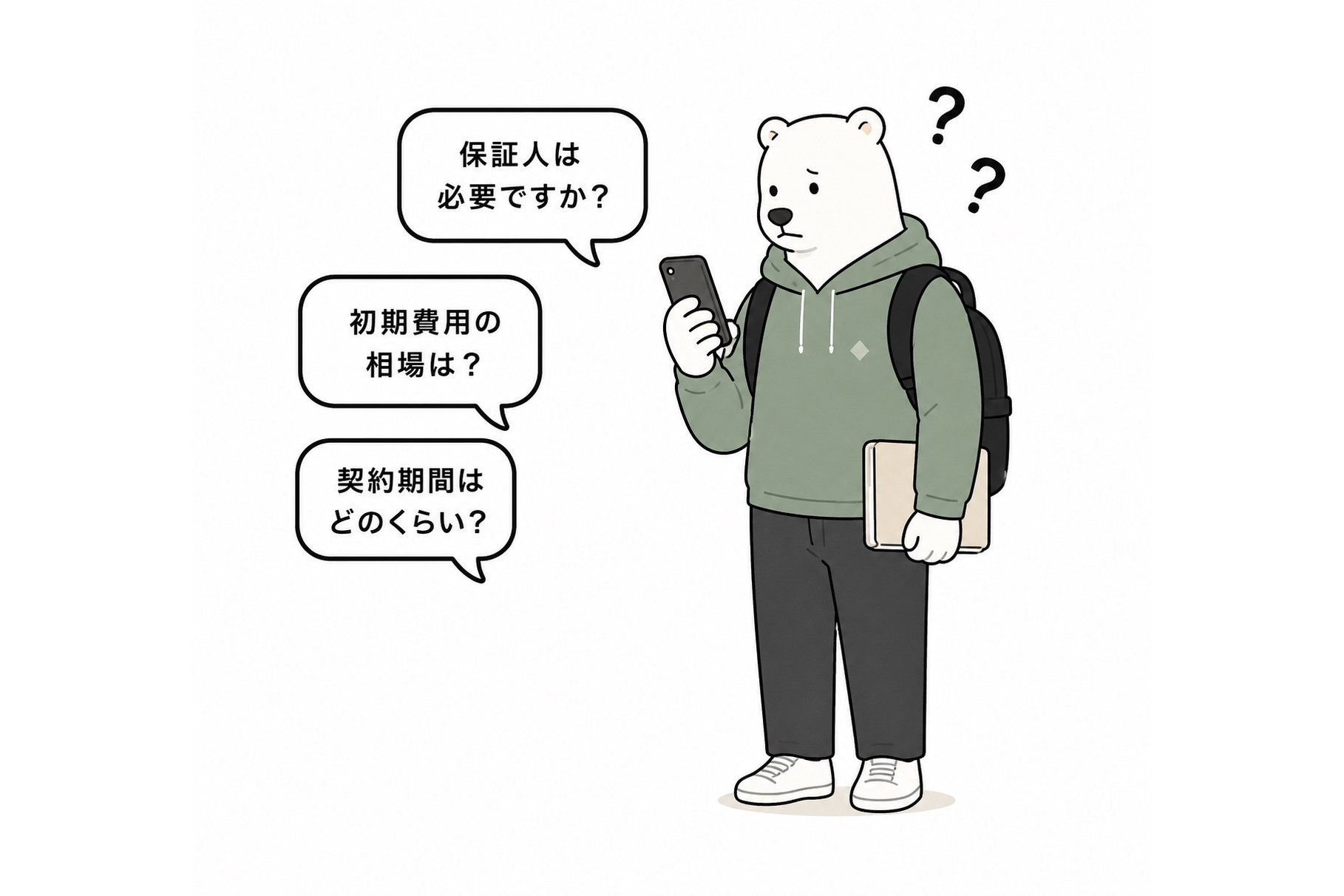
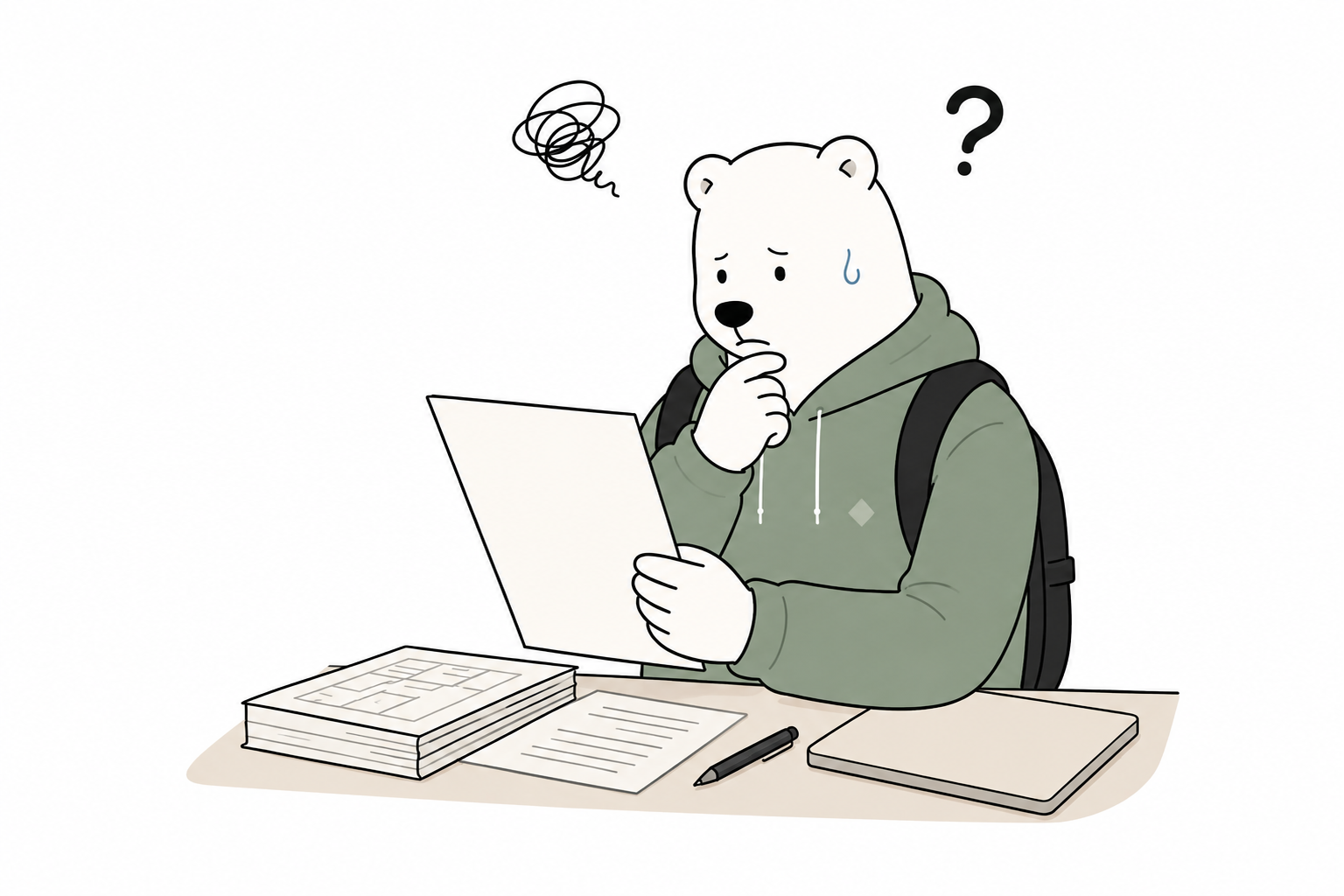
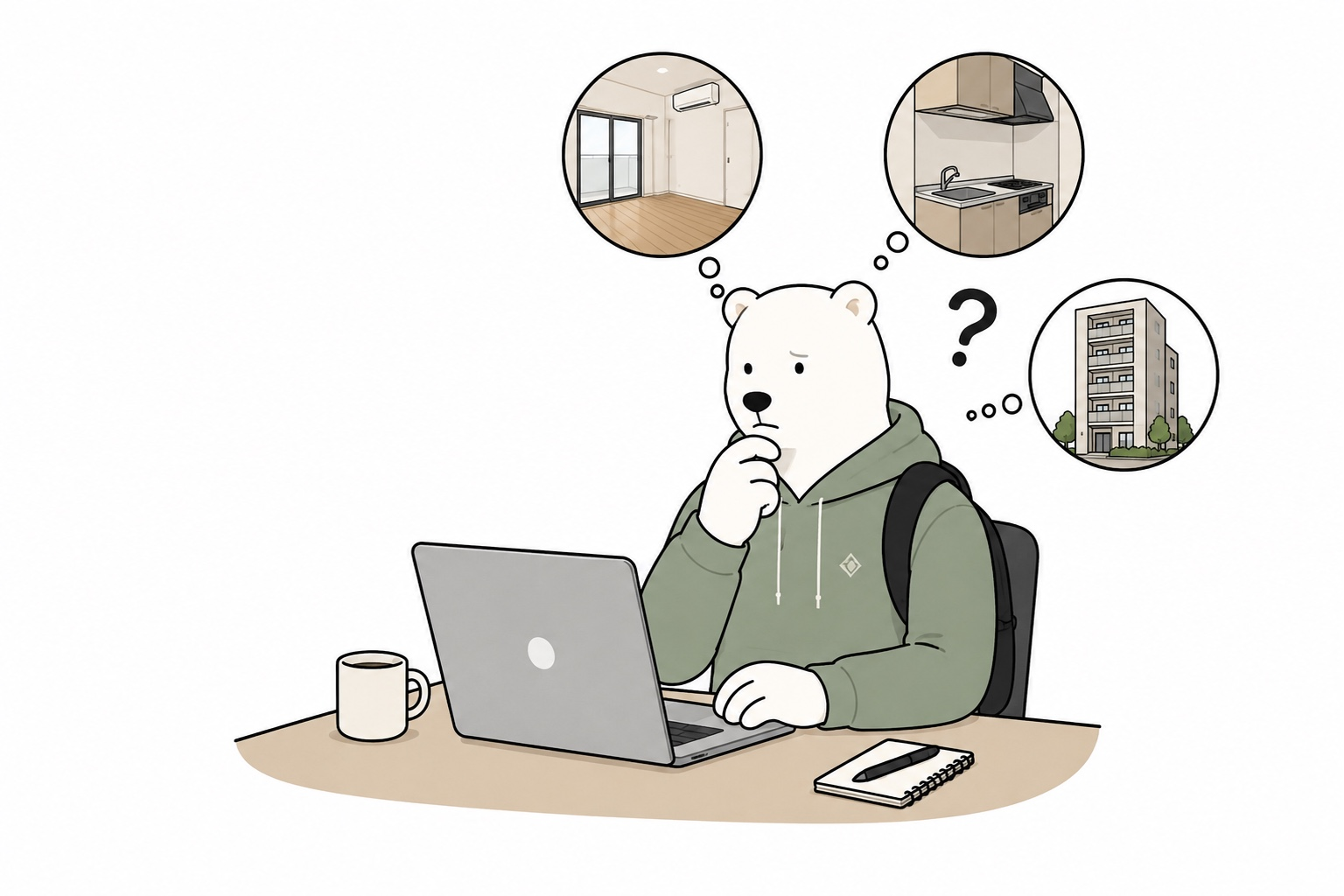
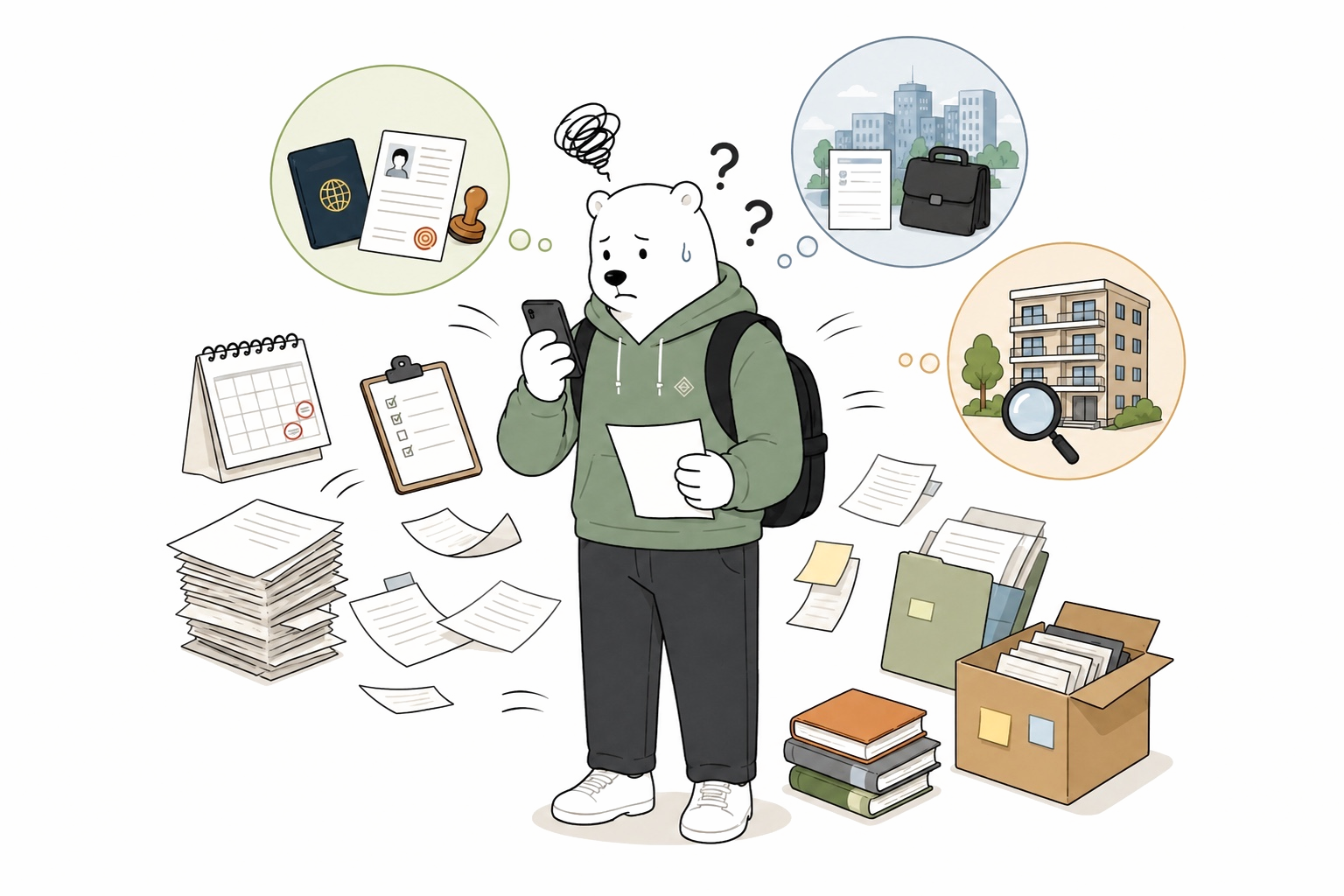
Whether you are an international student, moving for a new job, or looking for a place before you even arrive in Japan, we provide personalized support to help you find the perfect home. Please feel free to reach out and share your needs or concerns with us.


For those who have secured a job and are looking for a convenient home near their workplace with easy access to daily necessities.

For those currently abroad who want to secure a home before arriving in Japan.

For those looking for a spacious home for the whole family in a well-established neighborhood.

For companies looking to arrange housing for employees and seeking a reliable, consistent point of contact.

For those already living in Japan who are looking to move to a home that better suits their needs.
From assessing your needs to signing the contract and moving in, we make every step more transparent and seamless. Konyo is here to support you so you can make informed decisions at every stage.

Consultation & Needs Assessment
We take the time to understand your budget, preferred area, move-in date, and lifestyle to prepare the best possible recommendations for you.
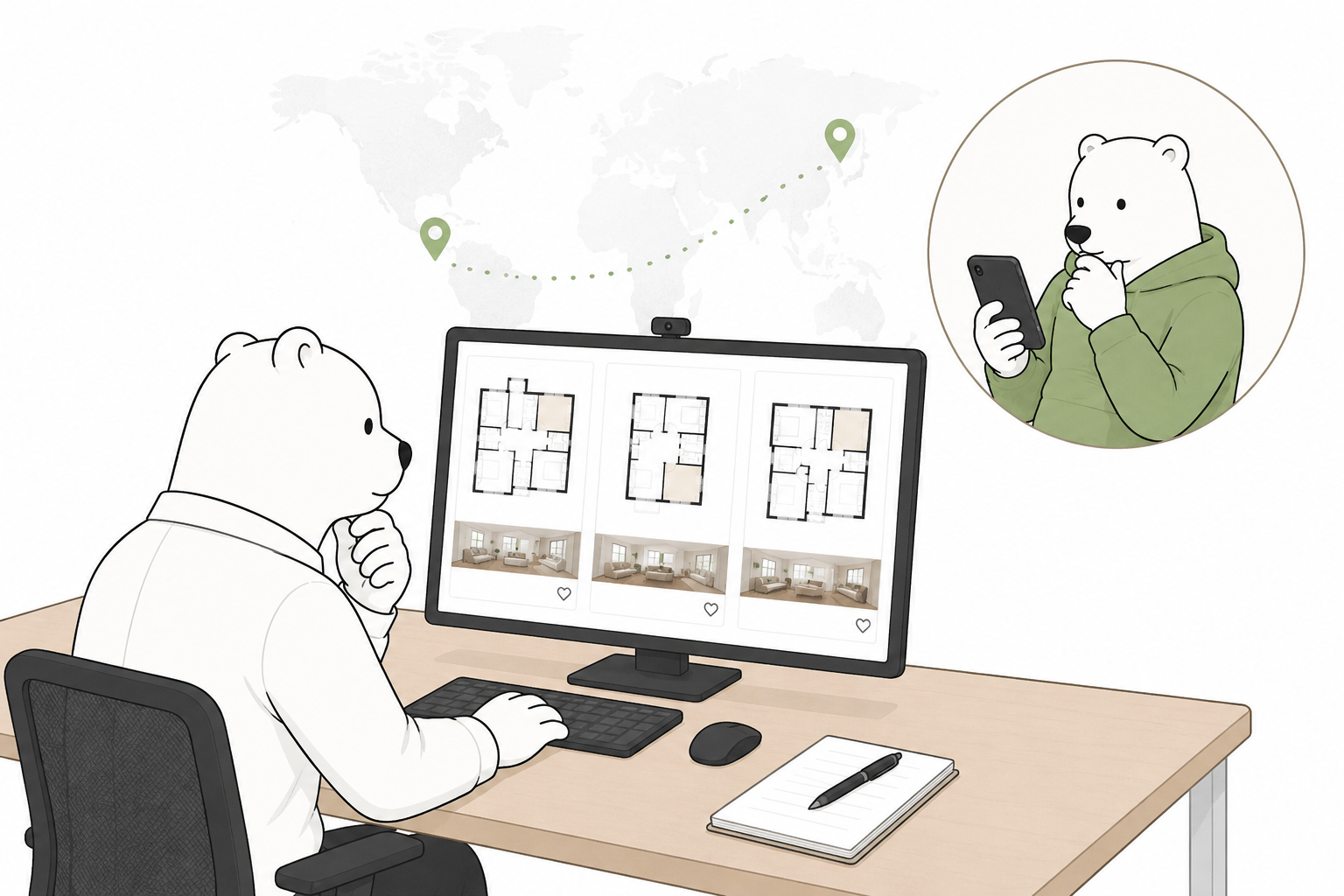
Property Proposals & Coordination
We carefully select properties tailored to your situation and propose the best options. Once you find a property you like, we also assist with initial negotiations with the management company.
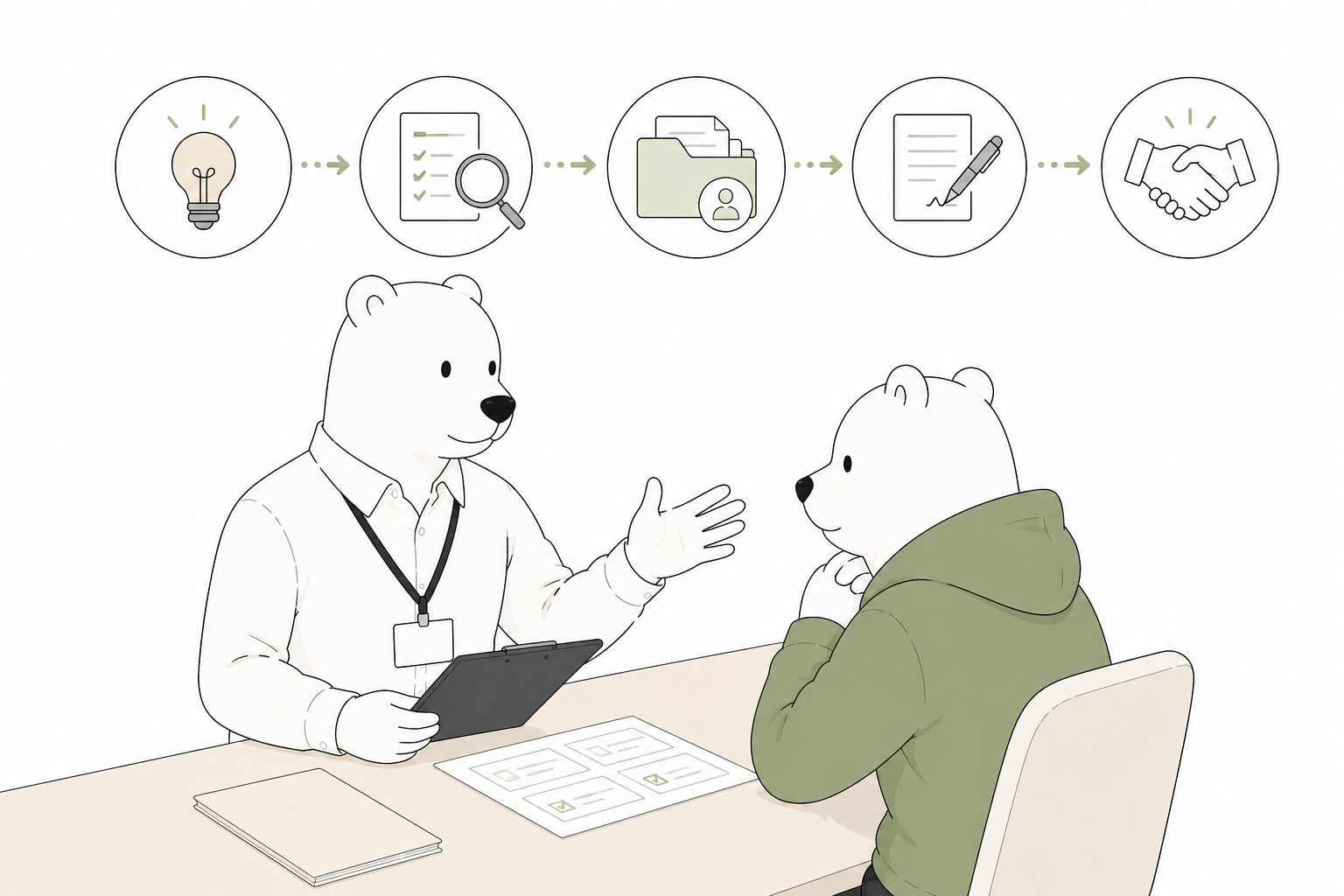
Application & Contract Support
We provide end-to-end support from the application to the final signature, including preparing the necessary documents for screening and explaining the contract details in full.
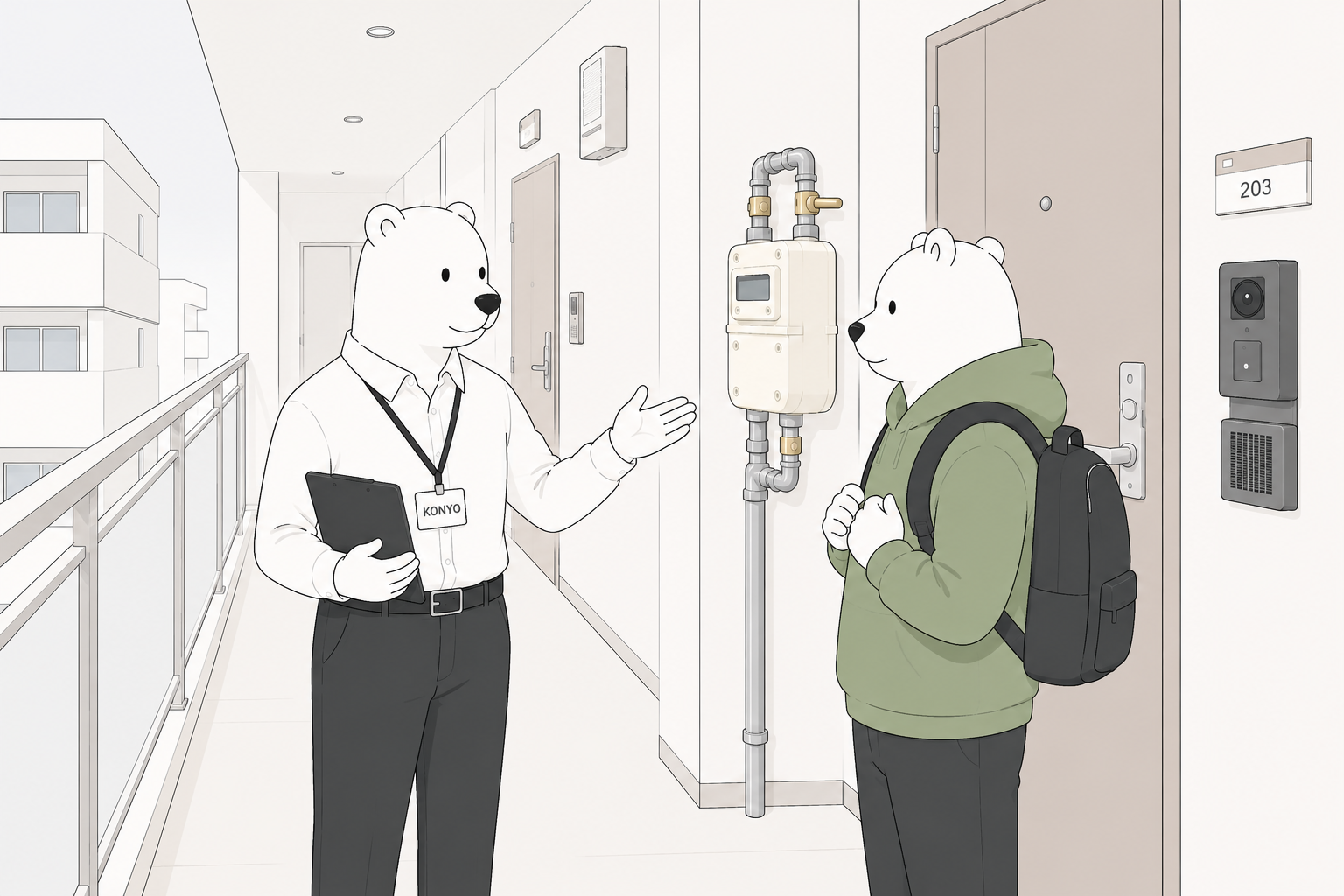
Post-Move-In Support
We continue to assist you with any questions or concerns about daily life even after you move in. Our support system is in place to ensure you can start your new life with peace of mind.
Screening processes, guarantor companies, key money, security deposits, initial costs, move-out cleaning, and cancellation notices—these terms related to renting in Japan may be unfamiliar to foreign nationals. At Konyo, we explain each of these points carefully to ensure you have a complete understanding.
Language Support
We will explain everything carefully in your own language.

We provide a one-stop solution for the various needs international clients face when renting in Japan, from moving to insurance procedures. We carefully select our service partners to ensure the best possible value and quality for our clients.
We handle the enrollment process for mandatory rental fire insurance. From recommending plans to submitting applications and reviewing contract details, we manage the entire process with care.
We take care of the procedures required to set up your water, electricity, and gas. We handle all communication and coordination with utility providers so that everything is ready for you to use the moment you move in.
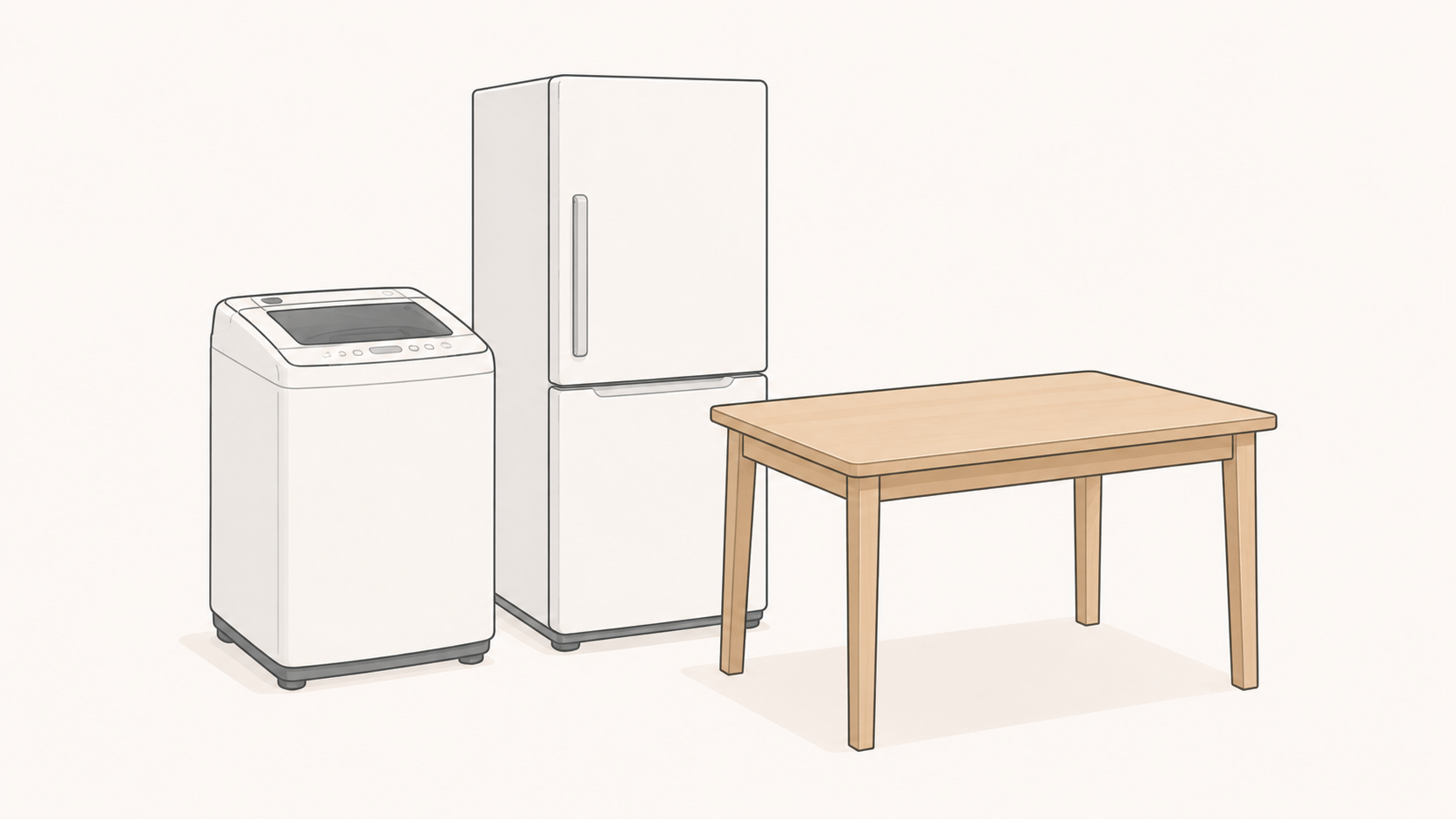
Handled by our specialized department, we offer and sell furniture and appliances—such as beds, refrigerators, and washing machines—tailored to your budget and needs for your new home.
Our specialized moving department handles all relocation tasks. We manage everything from planning the logistics of packing and transport to overseeing the work on moving day.

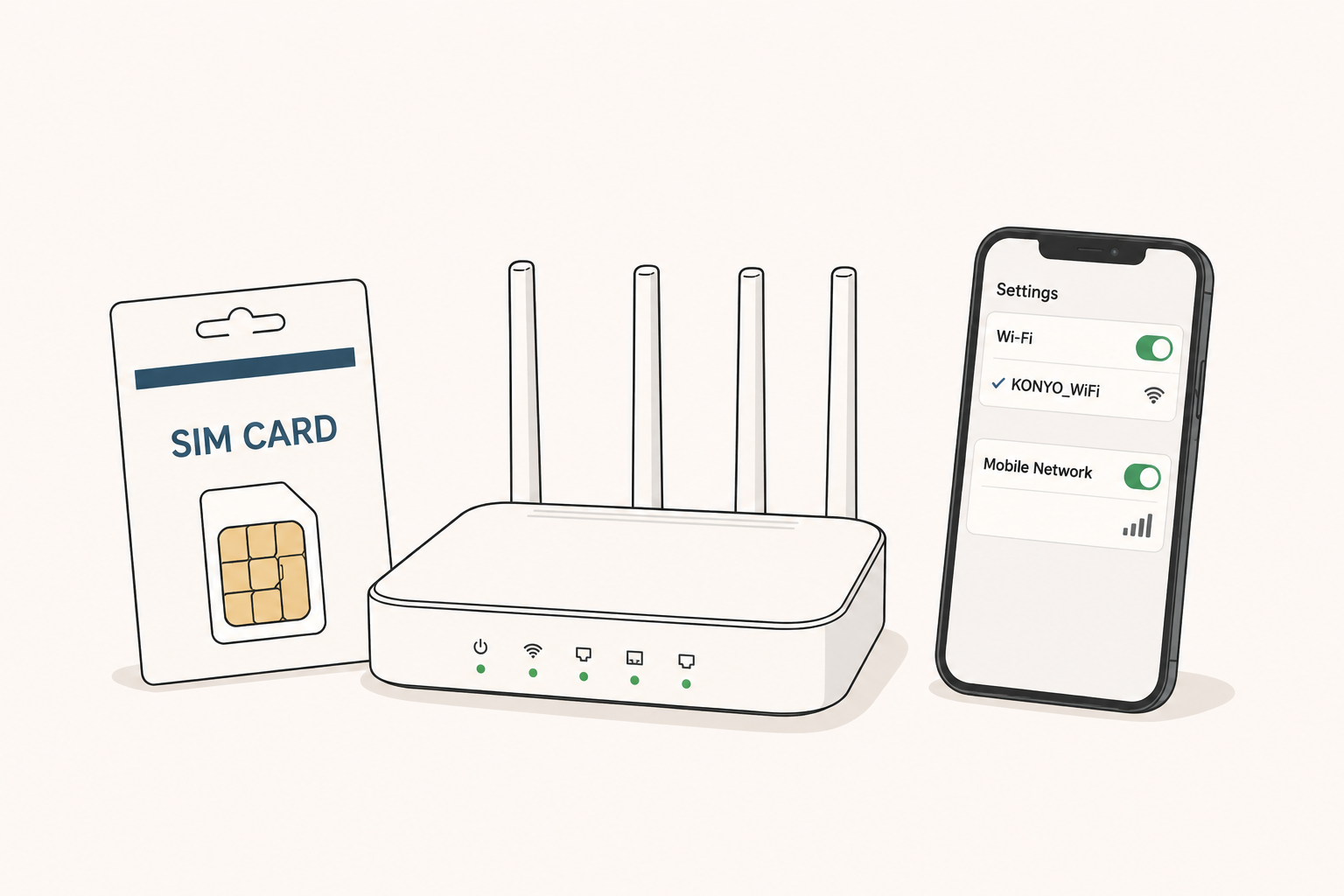
We handle the setup of SIM cards and Wi-Fi for you. You can secure a phone number before arriving in Japan, and we ensure your communication services are ready to go on your move-in day.
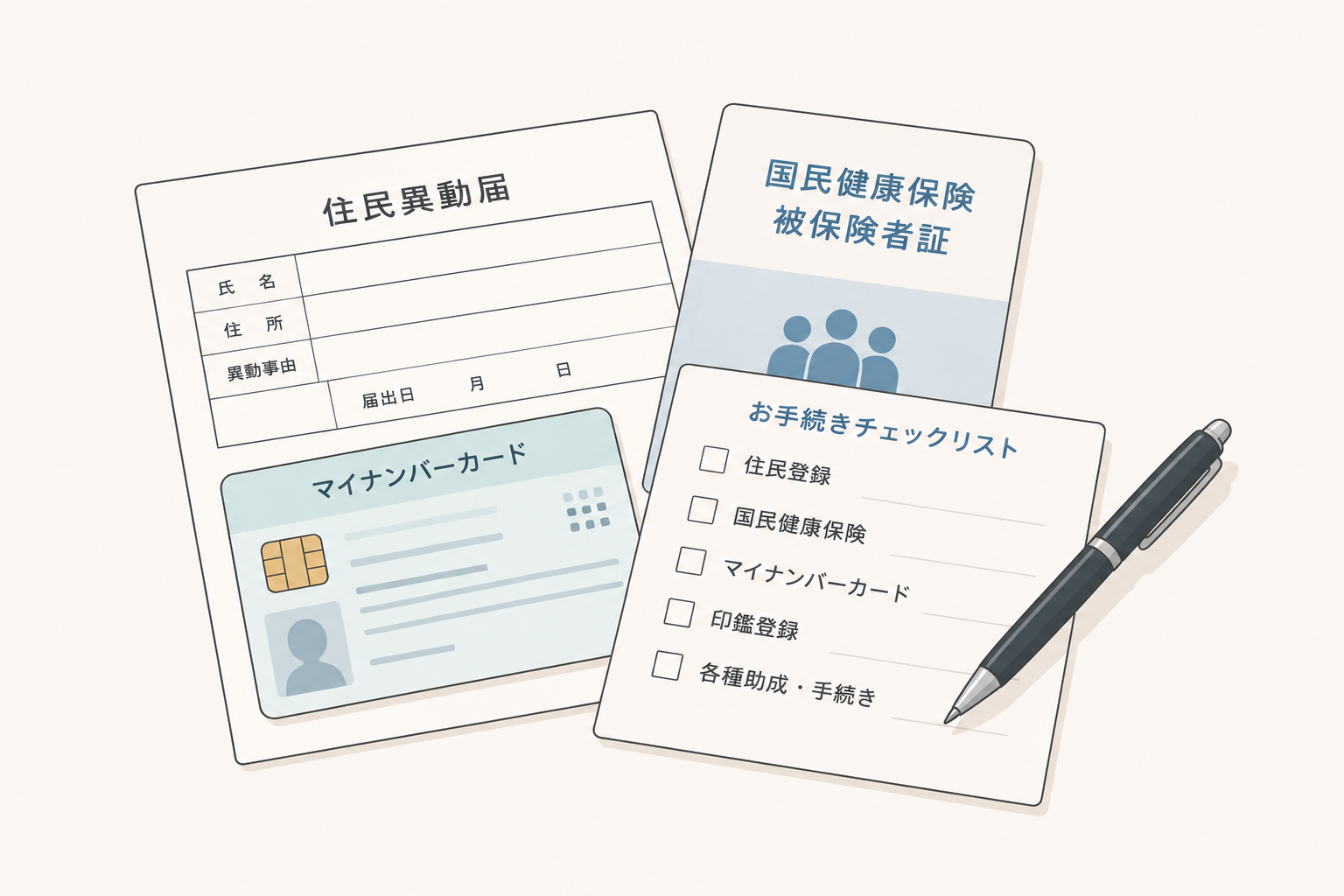
We provide guidance on essential local administrative procedures, such as resident registration and national health insurance, to help you start your new life with peace of mind.
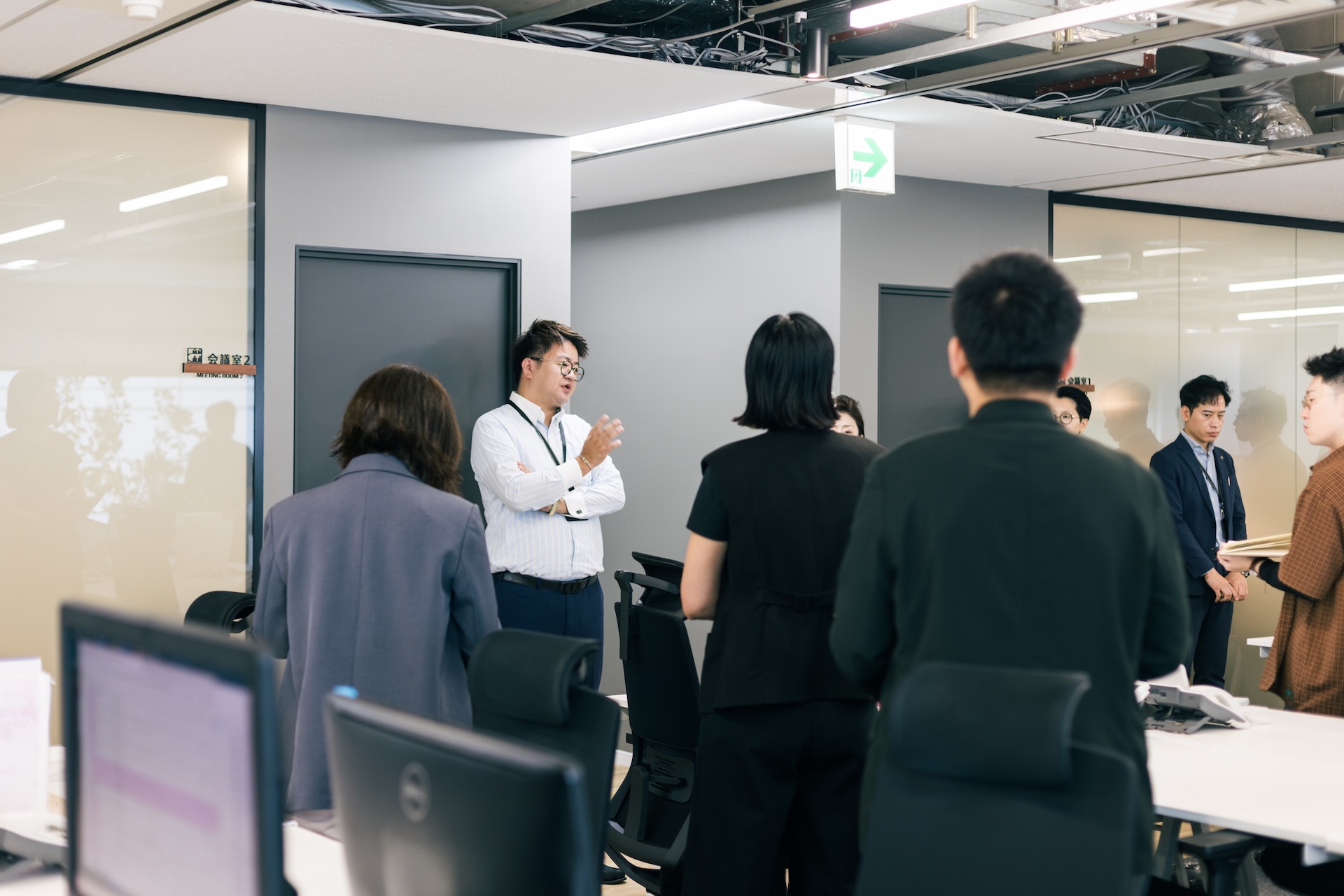
The Konyo team is a group of experienced professionals who specialize in navigating diverse languages and cultures. We do more than just find you a place to live; we leverage our individual strengths to provide sincere, comprehensive support, ensuring you settle into your new life in Japan with ease.







Studying or working in Japan is the start of a new chapter in your life. Beyond just finding a home, we are here to help with your preparations and ease any concerns about adjusting to a new environment. We are committed to supporting you every step of the way so you can take your first steps in Japan with confidence.
Every client has a different vision of their ideal home. We take the time to listen to your needs and lifestyle, offering the perfect property whether you are looking to rent or buy. You can count on us for seamless support from your initial consultation through to the final contract.
To ensure peace of mind for those living in Japan for the first time, we provide support in multiple languages and offer comprehensive assistance with everything needed for your new life, including administrative procedures, utilities, and SIM/Wi-Fi setup. Please feel free to consult with us about even the smallest concerns.

.svg)
From the apartment hunting process to costs and life after moving in, we provide clear explanations for various questions regarding renting in Japan.
Foreigners can rent apartments in Japan. However, when searching for a home, you may come across properties that do not accept foreign tenants. This is usually because landlords have concerns about language barriers, tenants’ understanding of the lease terms, and communication and support in the event of an emergency.That said, the situation is gradually improving, and more properties are becoming available to foreign tenants. Konyo has built long-standing relationships of trust with landlords and property management companies that actively welcome foreign residents. Before recommending a property, we confirm in advance whether foreign applicants are accepted, helping our clients avoid wasting time on applications that are unlikely to be approved.

Generally, the required documents include: a residence card, passport, proof of income (such as a withholding tax slip or the last three months of pay stubs), certificate of employment, a copy of your bankbook (required for some properties), emergency contact information, and any additional documents required by the guarantee company. Since requirements can vary by property and guarantee company, Konyo provides a checklist before you apply to help you prepare everything smoothly.
Rental applications typically involve a two-stage screening process. First, a guarantee company evaluates the applicant based on factors such as income, residency status, employment, and credit history. Following this, the landlord conducts a final review. Approval from both parties is required, as a landlord may still decline an application for other reasons even after the guarantee company has approved it. The guarantee company screening usually takes 1–3 business days, while the landlord's review takes about 1–2 business days.
Yes, you can. Currently, many rental properties in Japan accept the use of a guarantor company instead of an individual joint guarantor. The guarantor company takes on the role of fulfilling payment obligations if the tenant cannot pay rent, and this has become the most common solution for foreign clients. However, guarantor companies have their own screening criteria, and results vary based on visa status, income level, and credit information.
While reasons for rejection are rarely provided, common causes for foreign applicants include: a short remaining period on their visa, insufficient proof of income (generally, monthly income should be at least three times the rent), employment as a part-time worker or self-employed, lack of an emergency contact in Japan, or failing the guarantor company's screening. Konyo evaluates your eligibility before introducing properties and suggests countermeasures if there are any risks.
While it is possible to apply, the approval rate tends to be slightly lower. If you do not have a work history, you may be able to provide other proof of financial stability, such as bank balance statements, scholarship certificates (for students), or family guarantees. Some guarantor companies have special screening routes for these situations. Konyo has extensive experience in such cases and can suggest an application strategy tailored to your actual circumstances.
Some management companies and landlords offer online viewings via video calls or pre-recorded videos. However, availability depends on the management company and the specific property, so it is not available for everything. For clients who have not yet arrived in Japan or cannot visit in person, Konyo staff can conduct on-site inspections on your behalf and provide detailed photos and reports, ensuring you have a full understanding of the property's condition before making a decision.
Japanese language proficiency is not a direct evaluation criterion for screening. Whether a landlord or management company accepts foreign tenants is entirely their decision and is not directly related to language skills. At Konyo, we leverage our trusted relationships with landlords and management companies who are open to foreign tenants to pre-screen properties, preventing unnecessary application failures due to language or nationality. Throughout the application process, Konyo staff handle negotiations and correspondence in Japanese, and we also provide support in multiple languages, including Chinese, English, and Vietnamese.
The process from application to move-in generally follows these steps: viewing → application → screening (1–3 business days) → contract procedures → payment of initial costs → key handover. It usually takes 1–2 weeks from application to receiving the keys. In complex cases or when a guarantor company screening is required, it may take about 3 weeks. We recommend starting your search at least one month before your desired move-in date. March and April are peak moving seasons in Japan, and procedures tend to take longer than usual during this time.
Yes, you can. A rejected application does not go on a "blacklist" and will not directly affect your next application. However, before applying again, we recommend working with an advisor to analyze why the previous application was rejected and to review your property selection and documentation. If you are rejected by the same guarantor company multiple times, we suggest applying through a different one.
Initial costs typically include: a security deposit (1–2 months' rent), key money (1–2 months' rent, depending on the property), a brokerage fee (legally capped at 1 month's rent + tax), advance rent (the first month or half-month), fire insurance (approx. 15,000–20,000 JPY per year), a lock replacement fee (approx. 15,000–20,000 JPY), and an initial guarantee fee for a guarantor company (approx. 0.5–1 month's rent). In total, initial costs generally amount to 4–6 months' rent. Choosing a property with no key money can help reduce your upfront burden.
"Reikin" (key money) is a customary gratuity paid in a lump sum to the landlord at the time of contract, typically ranging from one to two months' rent. It is not returned upon move-out. Recently, more properties are offering "zero key money" options, especially in major cities like Tokyo. However, this may affect other terms of the lease. Konyo can help you find properties with zero or reduced key money to fit your budget.
Please pay close attention to the following points: 1. Scope of restoration upon move-out: While Ministry of Land, Infrastructure, Transport and Tourism guidelines state that wear and tear from normal use is the landlord's responsibility, be wary of clauses that shift these costs to the tenant. 2. Penalties for early termination. 3. Presence and amount of renewal fees. 4. Prohibited activities (pets, musical instruments, subletting, etc.). 5. Ownership of equipment and repair responsibilities. Since reading contracts in a foreign language has its limits, Konyo explains each clause one by one before you sign, ensuring you fully understand everything.
For properties with a standard lease (renewed every two years), a renewal fee may be charged, typically equivalent to one month's rent. Additionally, some guarantee companies may charge an annual renewal fee. For fixed-term leases, if you wish to continue living in the property after the term expires, you must sign a new contract, which may involve paying initial costs again. Please be sure to check the renewal clauses before signing your contract.
In addition to rent, common monthly fixed costs include management or common service fees (for the maintenance of shared areas, typically ranging from several thousand to 10,000 yen), annual guarantee company fees (sometimes billed monthly), and utility costs for water, electricity, and gas (contracted individually with each provider). Some properties include management fees in the rent, so please be sure to check the breakdown of costs before signing your contract.
In Japan, fire insurance is effectively mandatory for residential rentals, and almost all landlords and management companies require it as a condition of the contract. The annual premium is typically around 15,000 to 20,000 yen. While real estate agents may recommend specific plans, you are not legally obligated to choose the agent's preferred provider; you may select your own as long as the coverage meets the landlord's requirements. Konyo provides a fire insurance enrollment service and can handle everything from verifying coverage to completing the application.
There are two main types of residential rental contracts in Japan. A standard lease agreement is usually for two years and can be renewed upon expiration. A fixed-term lease agreement has a set duration with no automatic renewal, and mid-term cancellation is often strictly restricted. For standard leases, you are usually required to provide written notice 1–2 months in advance if you wish to cancel mid-term. Penalties for early termination vary by property, so we recommend confirming these details and keeping a record before signing.
In Japan, initial rental costs are typically paid in a lump sum at the time of contract, and installment plans have not been common under traditional systems. However, some guarantee companies and service providers have recently begun offering installment options for initial costs, which may help reduce your upfront financial burden. Availability depends on the policies of the specific property and management company. Konyo can help you check if installment payment options are available for your chosen property.
The refund amount depends on the condition of the property at move-out and the terms of your contract. According to the MLIT's "Guidelines for Troubleshooting Restoration to Original Condition," costs for wear and tear resulting from normal use (such as wall discoloration, floor wear, or fading from sunlight) are the landlord's responsibility. The tenant is primarily responsible for damage or soiling that exceeds normal use, or damage caused by pets or smoking. If your final statement includes unreasonable deductions, you have the right to contest them based on these guidelines.
If you disagree with the refund amount or the deductions made, we recommend the following steps: 1. Request a detailed written explanation of the cost calculations from the landlord or property management company. 2. Compare the deductions against the Ministry of Land, Infrastructure, Transport and Tourism (MLIT) guidelines to verify their validity. 3. If negotiations fail, consult or file a complaint with your local prefectural real estate business division or consumer affairs center. 4. For significant amounts, consider legal resolution through small claims court (for claims up to 600,000 yen). Konyo can assist you in reviewing your move-out cost statement and challenging unreasonable deductions.
Rental properties in Japan are generally categorized into three types regarding pet policies: "No Pets," "Pets Negotiable," and "Pets Allowed." Properties that allow pets often have restrictions on the type, weight, and number of animals, and may require an additional security deposit. For "Pets Negotiable" properties, you must consult with the landlord individually and obtain written permission. Keeping a pet without authorization is a breach of contract and may lead to high repair costs upon moving out. Please consult with your advisor during the application process, and Konyo will handle the inquiries on your behalf.
Most residential rental properties in Japan prohibit playing musical instruments indoors due to the potential for noise complaints from neighbors. Properties that allow instruments are rare, often limited to buildings with high soundproofing, and tend to have higher rents. If you wish to play an instrument, please let us know at the time of application. Konyo can help you find a property that meets your needs. In some cases, you may be permitted to install soundproofing equipment with written consent from the landlord. Many people also utilize nearby music studios for practice.
Within 14 days of moving in, you are generally required to complete the following procedures: 1. Change of Address Notification: Register your residence at your local municipal office. This is a legal requirement for foreign residents in Japan. 2. Residence Card Update: Update the address on the back of your residence card at the same time you register your residence. 3. Utility Setup: Contact providers to set up water, electricity, and gas services. Konyo offers a utility setup service to ensure your essential services are ready to use from the day you move in.
In principle, the landlord or management company is responsible for repairs caused by natural wear and tear or manufacturing defects (e.g., water heater failure, clogged drains). Damage caused by improper use by the tenant is the tenant's responsibility. If a facility issue arises, we recommend notifying the management company promptly in writing (such as via email) and keeping a record of the correspondence. If the management company fails to fulfill its repair obligations, you may seek recourse under the relevant provisions of the Act on Land and Building Leases.
The standard minimum lease term for residential rentals is one year, and very few landlords accept stays of less than six months. If you need short-term housing, consider these alternatives: Monthly apartments often include furniture, appliances, and utilities, and have simplified screening processes, making them ideal for temporary stays. Weekly apartments are suitable for very short stays of less than a month. Both tend to have higher monthly costs than standard long-term rentals. Konyo can suggest the best property type for your desired length of stay.
In principle, structural modifications to rental properties—such as drilling holes in walls, changing flooring, or removing partitions—are prohibited. While removable hooks or peelable wallpaper are generally acceptable, we recommend checking your contract beforehand. If specific renovations are necessary, you must obtain written permission from the landlord in advance. Any damage caused by modifications must be restored to its original condition at the tenant's expense upon moving out.
Some properties have restrictions on families with infants or small children due to noise concerns. We recommend prioritizing detached houses or low-rise apartment buildings, which can help minimize noise impact on neighbors and reduce screening risks. When choosing a property, please also check for nearby daycare centers and elementary schools, the safety of school routes, and access to medical facilities. Konyo can suggest property types tailored to your family's needs.
Japanese rental contracts are typically signed by a single primary tenant. Adding a co-tenant who is not a family member without the landlord's written consent may be a breach of contract. If you wish to share a property, please let us know at the time of application so Konyo can negotiate a joint contract or the addition of a co-occupancy notice with the landlord. Please note that shared applications require income verification and residence status information for all occupants, which may take longer than individual applications. We recommend preparing well in advance.
Rental properties in Japan generally fall into two categories. Standard properties (unfurnished) typically include only an air conditioner, water heater, and kitchen fixtures; you will need to provide your own appliances such as a bed, refrigerator, washing machine, and microwave. Furnished properties come with basic furniture and appliances, making them easier to move into, though they tend to have higher rent. Konyo has a dedicated department for furniture and appliances that can assist you with everything from selecting and purchasing to delivering and installing the items you need.
When moving in, it is standard practice to conduct a move-in inspection and complete a checklist to document any existing damage or defects. We recommend carefully inspecting the property on your move-in day, documenting any pre-existing issues with photos and notes, and notifying the management company in writing. If the property's size, facilities, or natural lighting significantly differ from the contract, you may request an explanation or correction from the landlord or management company under the Real Estate Brokerage Act and the Consumer Contract Act. Keeping a record of your initial inspection is essential for future reference.